Midterm Math: How Parties Tried to Defy History on Election Day
With polls open, both sides deploy strategy to counter the historical trend of presidential party losses in off-year elections.
By Abigail Brooks ·
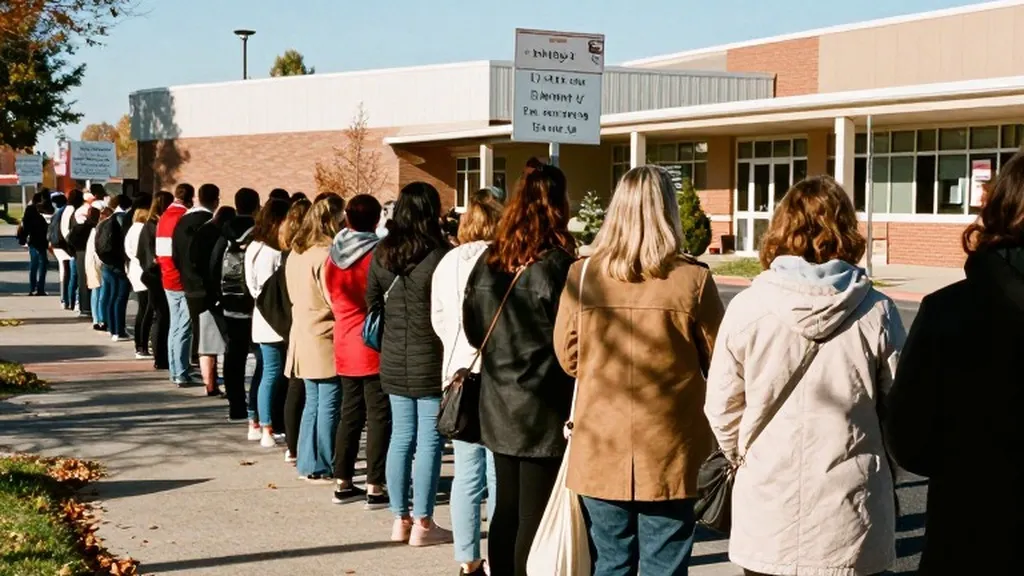
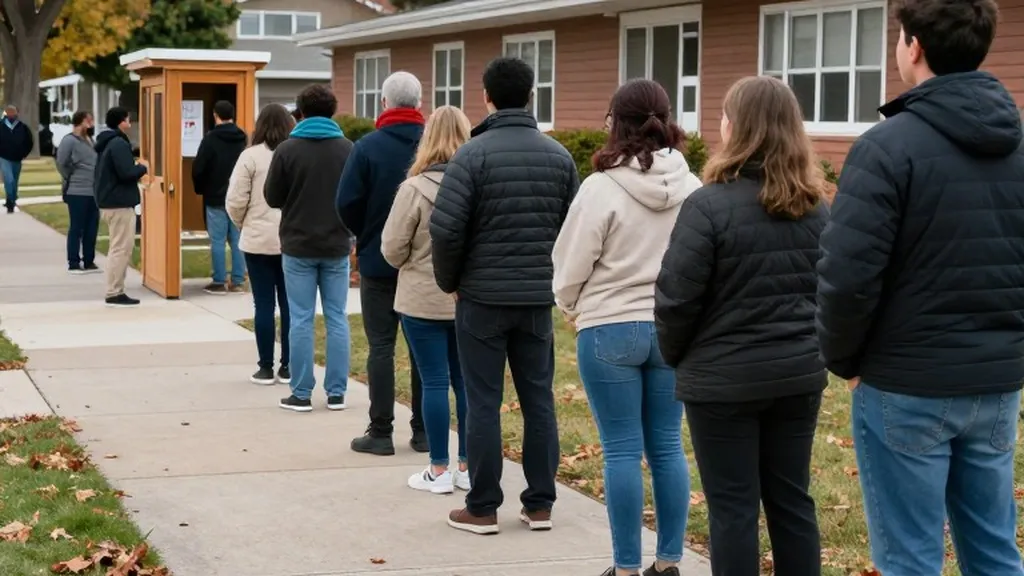
The midterm election is underway, marking the halfway point of President Donald Trump's second term. The results will determine which party controls Congress for the final two years of his presidency. Historically, the president's party almost always loses seats in these elections. Both political parties have attempted to counter this trend this year using distinct strategies. Democrats are focused on the cost of living, health care, and the unpopular war with Iran. They view this vote as a referendum on the administration's performance. Republicans are relying on a significant financial advantage and new redistricting maps. The Associated Press describes the day as a critical moment for both parties to beat the odds.
All 435 seats in the U.S. House of Representatives are up for election. Republicans currently hold 218 seats, while Democrats hold 214. Democrats need a net gain of three districts to achieve a majority. Republicans can afford to lose no more than two seats. Ballotpedia identifies 46 battleground districts in this contest. Twenty-five of these districts are currently held by Democrats, and 21 are held by Republicans. Twenty-one Democratic-held districts voted for Trump in the 2024 presidential election. Nine Republican-held districts voted for Kamala Harris. This dynamic creates a complex landscape for both parties as they fight for control of the chamber.
In the U.S. Senate, 35 seats are on the ballot. Republicans hold 53 seats, Democrats hold 45, and two independents caucus with Democrats. Democrats need a net gain of four seats to take control of the Senate. Republicans can lose only two seats to maintain their majority. Eleven senators are not running again, including four Democrats and seven Republicans. The special elections in Florida and Ohio are also part of this cycle. Winners will begin their six-year terms on January 3, 2027. The Associated Press notes that one or two seats could tip the balance in either chamber. This makes the Senate race particularly tight and consequential for the administration's agenda.
Governorships are also a major focus of this election. Thirty-six governorships are up for grabs. Republicans currently hold 26 offices, and Democrats hold 24. Democrats would need a net gain of two governorships to achieve a nationwide majority. Republicans have held the majority of governorships since 2010. Nineteen of these races have no incumbent on the ballot. Fifteen governors are term-limited, and others chose not to run or lost their primaries. Democrats hope to hold a majority of governorships for the first time in two decades. This would provide a significant strategic advantage for the party in the coming years.
Money has played a defining role in the 2026 elections. These contests are likely to be the most expensive in history. Republican committees outraised and outspent Democratic committees at the committee level. This was helped by Trump-affiliated groups and Elon Musk. However, at the candidate level, Democrats outraised their opponents. An analysis by the Associated Press of AdImpact data shows that 88.1 percent of Republican general election TV ad spending went to states and districts Trump won in 2024. More than 850 million dollars was spent in areas where he won by 10 points or more. This spending pattern reflects the Republican strategy of defending the president's core base while attacking vulnerable districts.
Redistricting has also altered the electoral map. Six states are using new congressional maps after mid-decade redistricting. These states are California, Florida, Missouri, North Carolina, Tennessee, and Texas. Ohio is also using a new map. Republicans attempted to use these new maps to beat the historical midterm pattern. However, the new districts in Florida and other states may not vote exactly as drawn. This uncertainty adds another layer of complexity to the election. The Associated Press notes that the new maps could swing seats in both directions. Voters in these new districts will decide whether the redistricting efforts were effective.
Voters are grappling with high prices and anger over the war with Iran. The Associated Press reports that 35 percent of U.S. adults approve of Trump's job performance. Only 25 percent approve of his handling of the economy. About seven in 10 Americans say the country is heading in the wrong direction. Most blame the president for high prices. More than 57 million people had already voted as of Monday. This number surpasses the early vote of four years ago in many closely watched states. The high early vote suggests strong engagement from voters on both sides. This turnout is critical for both parties as they try to win their respective bases.
Trump has held dozens of rallies to energize Republican voters. He ended his schedule on Sunday in Salina, Kansas, where he told supporters to pretend he is on the ballot. His rallies included stops in Mississippi, South Carolina, and Texas. Many Republican candidates kept their distance from the president during the campaign. Trump has continued to make claims about voting fraud, including that noncitizens vote in large numbers. His administration has sued in Alaska and California regarding election procedures. Democrats fear interference and intimidation as the Justice Department threatens to prosecute local election officials. These legal battles are adding tension to the election day atmosphere.
Democrats are cautiously optimistic about their chances. The Democratic Congressional Campaign Committee Chair Rep. Suzan DelBene said the American people are angry and want change. The Republican National Committee Chairman Joe Gruters stated that everything depends on turnout. He said if they turn out their voters, they win. This highlight the importance of mobilization for both parties. The election is not just about the national ticket but also about local issues. Voters in states like Georgia and North Carolina are deciding key Senate races. The outcome will shape the legislative agenda for the next two years.